Occasionally, new users may encounter instances where their drum pads appear to fall or collapse downward during use on their Nitro Mesh or Max Kits. This article aims to clarify the underlying causes of this issue, outline recommended next steps, and provide guidance on preventing recurrence. Additionally, we will share useful tips and tricks to optimize the stability of your rack setup.
TABLE OF CONTENTS
Why are the pads collapsing?
Within the drum clamps, there is a locking mechanism consisting of a ring held in place by pressure, along with two inward-facing tongues. Your rack tubing features a corresponding channel that interacts with this system to secure the drum in position and maintain stability.
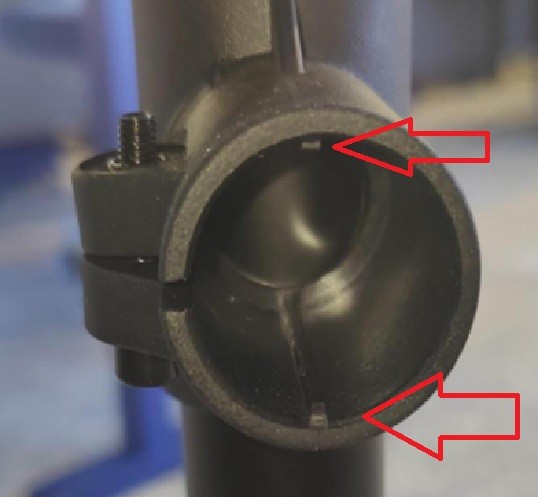
These channels run the length of the rack tube. When pressure is applied via the clamp, the ring grips the tube, while the tongues prevent rotation, ensuring a secure fit.
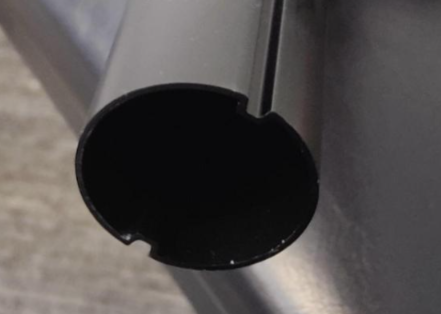
The tube itself is constructed from metal, while the clamps are made of durable plastic. Incorrect assembly—specifically, misalignment of the tongues with the tube—can lead to two primary issues:
Broken Tongues: If the tongues are not properly aligned before the clamp is applied, they may break when the clamp is secured, especially if excessive force is used. In this case, the clamp may initially appear secure, but without the tongues functioning correctly, the tube is prone to rotation, causing the pad to fall.
Stripped Clamp Fitting: If the tongues remain intact but the tube is damaged—such as dented or deformed—the clamp may not grip properly, resulting in a loose fit. This can cause the clamp to feel overly tight or loose, and the pad may become unstable despite adjustments.
How do we move forward?
First, assess the movement of the drum: Determine whether the entire rack tube is moving or if only the drum pad is shifting.
- If the drum moves independently of the rack tube, the clamp may need replacement. Remove the clamp and inspect the internal tongues for damage.
- If the entire arm moves, remove the rack tube from the frame and check for any dents or deformities. If the tube is undamaged, examine the clamp’s internal tongues to assess their condition.
- Inspect the Components: Based on your observations, decide whether the tube or the clamp requires replacement to restore stability.
How can we prevent this?
Always ensure proper alignment when assembling the kit by matching the tubes to the corresponding inside of the clamps.
Avoid overtightening the clamps; if the locking system is functioning correctly, a firm but comfortable tightening should suffice to secure the components.
Other Tips and Tricks
The clamp system on the Alesis Nitro Mesh and Max Kits offers notable versatility. The internal ring within each clamp is floating when not under pressure, allowing you to lock the clamp at any desired angle once tightened.
Should you lose the key used to tighten the rack, please note that the hex nuts are compatible with standard drum keys used for acoustic kits.
Was this article helpful?
That’s Great!
Thank you for your feedback
Sorry! We couldn't be helpful
Thank you for your feedback
Feedback sent
We appreciate your effort and will try to fix the article